Weather Boost is one of the most visible mechanics in Pokémon GO, but its effects go far beyond changing the visual backdrop of your map.
Many players associate the system purely with seeing different species during a rainstorm or a sunny day, but weather changes several underlying mechanics at once. Understanding how Weather Boost works lets you target specific types, catch stronger Pokémon, hit harder in battle, and save resources like Stardust and Candy.
What Is Officially Confirmed by Niantic
The following mechanics are officially documented by Niantic as core components of the Weather Boost system.
Weather Is Based on Real-World Conditions
Pokémon GO updates its in-game environment about once an hour using localized, real-world weather data. The game recognizes seven distinct weather conditions, each corresponding to specific Pokémon types:
- Sunny/Clear: Grass, Ground, Fire
- Partly Cloudy: Normal, Rock
- Cloudy: Fairy, Fighting, Poison
- Windy: Dragon, Flying, Psychic
- Rainy: Water, Electric, Bug
- Snow: Ice, Steel
- Fog: Dark, Ghost
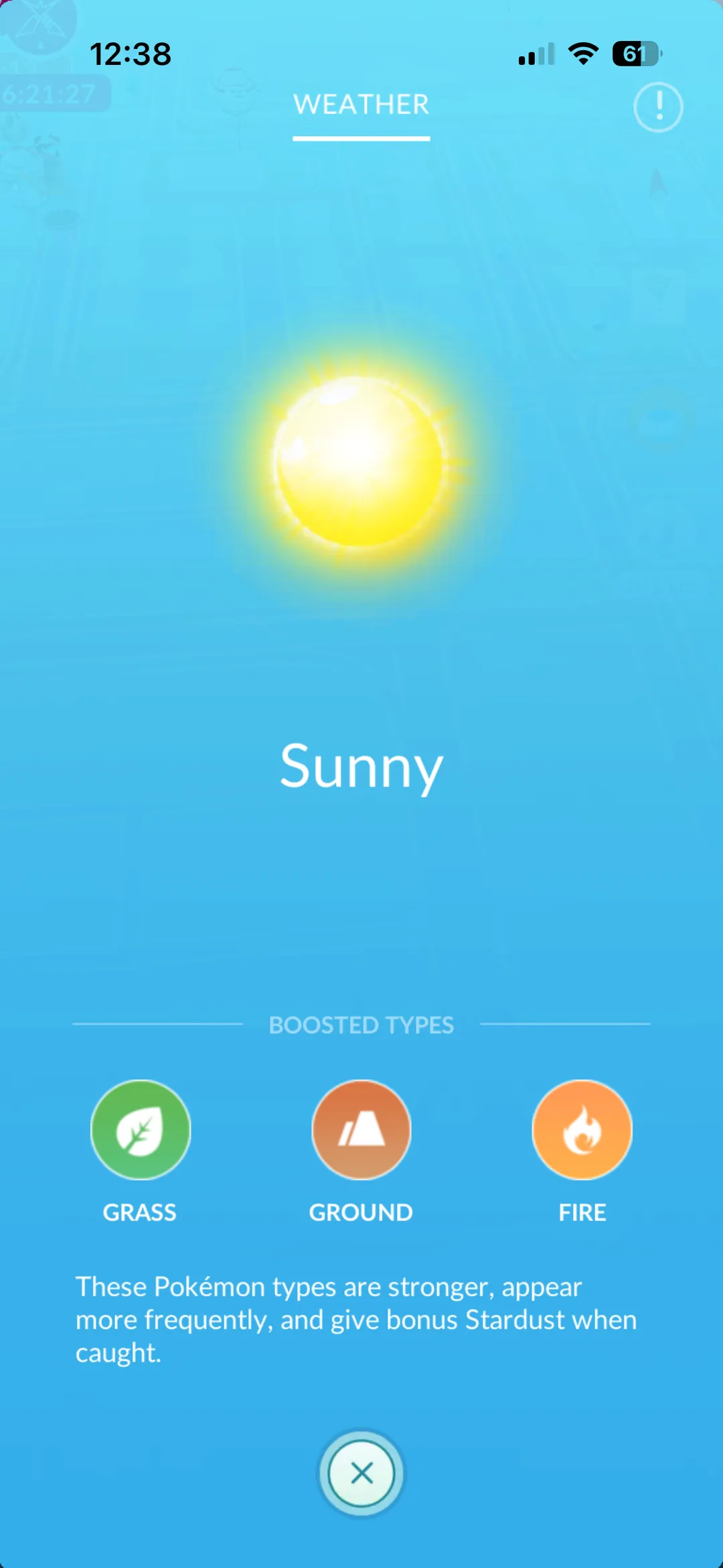
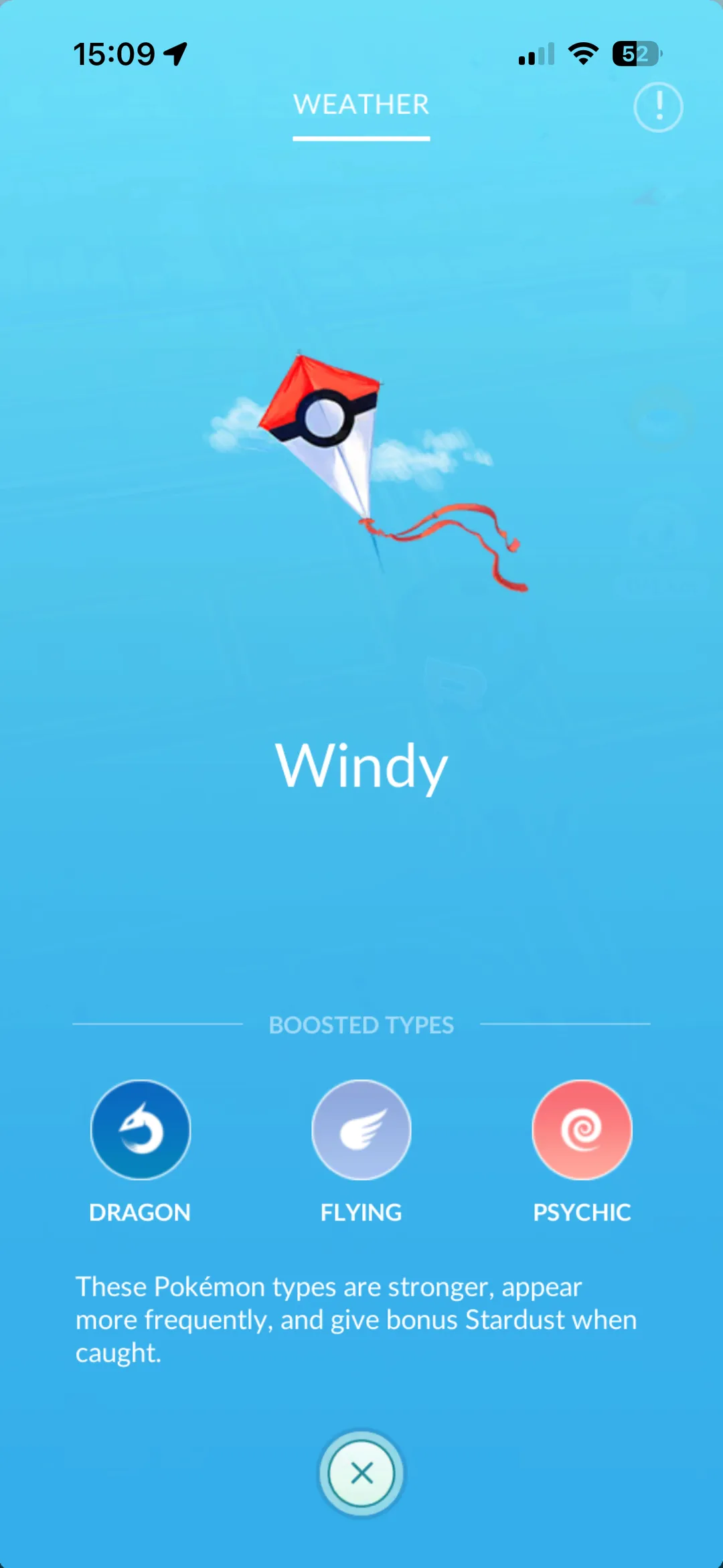
Increased Spawn Rates
When a weather condition is active, the spawn frequency of its associated types increases in the wild. You can spot a weather-boosted Pokémon on your map by the swirling blue aura around the sprite before you tap it.
Higher Level Caps for Wild Spawns
Wild encounters normally cap at Level 30. Weather Boost raises that cap by 5 levels, so matching-type Pokémon can appear up to Level 35.
A higher catch level means a stronger fighter for Raids or PvP right out of the gate, and it means less Stardust and Candy to power that Pokémon up to its maximum — and past Level 40, less XL Candy too.
Improved Minimum IV Floors
Weather-boosted encounters also receive a raised IV floor. A standard wild encounter can be as low as 0/0/0, but a weather-boosted wild encounter has a guaranteed minimum of 4/4/4. That baseline lifts the average quality of your catches and makes high-appraisal Pokémon easier to find.
Stronger Matching-Type Moves
Weather doesn’t only affect spawns; it also powers up attacks. A move whose type matches the current weather deals 20% more damage in Raids, Gym battles, and PvP. For example, Electric-type moves hit harder in Rainy weather, and Fire-type moves hit harder when it’s Sunny. This applies to both your Pokémon and your opponents, so a matching Raid Boss is more dangerous, not just easier loot.
Bonus Stardust on Catch
Catching a weather-boosted Pokémon awards 25% more Stardust than a normal catch. Stacked with a Star Piece, that adds up quickly during a heavy catching session.
The Tradeoff: Harder to Catch
Weather boost isn’t pure upside. Because boosted Pokémon are a higher level, their catch rate is lower, meaning they’re more likely to break out or flee than the same species unboosted. It’s usually worth it for the better stats and bonus Stardust, but bring extra Berries and good throws for anything you really want to keep.
Practical Applications in Gameplay
Checking your local forecast lets you line up sessions around the types and resources you’re after.
Hunting Water-Types
If you’re farming Candy to evolve a Gyarados or building a Water-type Raid lineup, Rainy weather is the time to go. Heading to a local park or waterfront while it rains noticeably increases your encounters with Water, Electric, and Bug types compared to a clear day.
Hunting Dragon-Types
Dragon-types are among the rarest natural spawns in the game. Windy weather boosts Dragon, Flying, and Psychic types, so a windy day raises your odds of running into one. Set expectations, though: weather lifts the rate, not the rarity, so Dragons like Dratini are still uncommon even in ideal conditions. A windy day is the best time to look, not a guarantee you’ll find one.
Common Misconceptions
Because Weather Boost influences spawns, a few community myths have built up around what it actually controls. Weather is only one of the three systems driving what appears on your map — biomes and event overrides do the rest.
- Does Weather Boost guarantee rare Pokémon? No. It changes the frequency of specific types, not the rarity tiers of the species themselves. You’ll see more of the boosted types overall, but common species within those types still outnumber the rare ones.
- Does Weather Boost increase Shiny odds? No. Shiny rates come from the species or specific event modifiers. Weather Boost improves levels, IVs, and move power, but it has zero effect on Shiny chances.
- Does Weather Boost affect Raids? Yes, in two ways. A Raid Boss whose type matches the weather is caught at Level 25 instead of the standard Level 20, saving you resources if you power it up. However, its matching-type moves also hit 20% harder during the fight, so a boosted boss can be tougher to beat. Check the weather before committing to a hard raid.
The Collector’s Perspective
Weather Boost is especially useful for collectors chasing specific variants. A species that rarely shows up under normal conditions can become much easier to find when an in-game event and favorable weather line up.
The harder part is remembering which forms you still need. It’s easy to recall whether you’ve caught a species at all, but tracking whether you already have its Shiny, Shadow, Costume, or Purified variant gets complicated fast. That’s where a tool like GoDex helps — keeping your collection goals in one place so you always know exactly what to look for when the weather turns in your favor.
Key Takeaways
- Type rotations: Weather shifts which Pokémon types appear more often, based on real-world conditions.
- Higher levels: Boosted wild Pokémon can reach Level 35, saving you Stardust and Candy.
- Better stats: Weather encounters have a guaranteed minimum IV floor of 4/4/4.
- Stronger moves: Matching-type attacks deal 20% more damage in battle — for you and your opponents.
- Bonus Stardust: Weather-boosted catches give 25% more Stardust.
- No Shiny influence: The system does not change your odds of finding a Shiny.
- Raid impacts: Matching weather makes a boss caught at Level 25 instead of 20, but also strengthens its moves.

We do our best to keep these guides accurate, but Pokémon GO mechanics change often. If you spot a mistake or something that's out of date, please send us feedback — we'll fix it.

About GoDex
A free companion app for tracking your collection, scanning IVs from screenshots, and checking PVP rankings. Available on iOS and Android.

